Navigating the healthcare system can feel overwhelming—especially when you're already managing a diagnosis or caring for a loved one. Understanding what types of care are available, how they're covered, and when to use each one is the foundation of effective healthcare navigation.
Types of Care Settings
Primary Care
Your primary care provider (PCP) is your first point of contact for most health concerns. They manage routine checkups, chronic condition monitoring, preventive care, and referrals to specialists. Building a strong relationship with your PCP is one of the most important steps you can take for your long-term health.
When to use primary care:
- Annual wellness visits
- Management of ongoing conditions like diabetes or hypertension
- Non-emergency illnesses (colds, minor infections)
- Coordination of specialist care
Specialist Care
Specialists have advanced training in a particular area of medicine—cardiology, oncology, orthopedics, and so on. You typically need a referral from your PCP to see a specialist, though some insurance plans allow self-referrals.
Tips for specialist visits:
- Bring a complete list of your current medications
- Write down your questions in advance
- Ask for copies of any test results or imaging
- Clarify follow-up instructions before you leave
Urgent Care
Urgent care centers fill the gap between your doctor's office and the emergency room. They handle conditions that need attention soon but aren't life-threatening.
Good for:
- Minor fractures and sprains
- Cuts that may need stitches
- Fever, flu, and respiratory infections
- Minor allergic reactions
Emergency Care
Emergency rooms are equipped for life-threatening situations. Because of their high cost and longer wait times, they should be reserved for true emergencies.
Go to the ER for:
- Chest pain or difficulty breathing
- Signs of stroke (FAST: Face drooping, Arm weakness, Speech difficulty, Time to call 911)
- Severe allergic reactions
- Uncontrolled bleeding
- Loss of consciousness
Understanding Your Insurance Coverage
Your insurance plan determines which providers are in-network, what your cost-sharing looks like, and which services require prior authorization. Here are the key terms to know:
- Premium — the monthly amount you pay to keep your insurance active
- Deductible — the amount you pay out-of-pocket before insurance kicks in
- Copay — a fixed fee you pay per visit (e.g., $30 for a PCP visit)
- Coinsurance — your share of costs after meeting the deductible (e.g., 20%)
- Out-of-pocket maximum — the most you'll ever pay in a year; after this, insurance covers 100%
How Bndl Care Helps
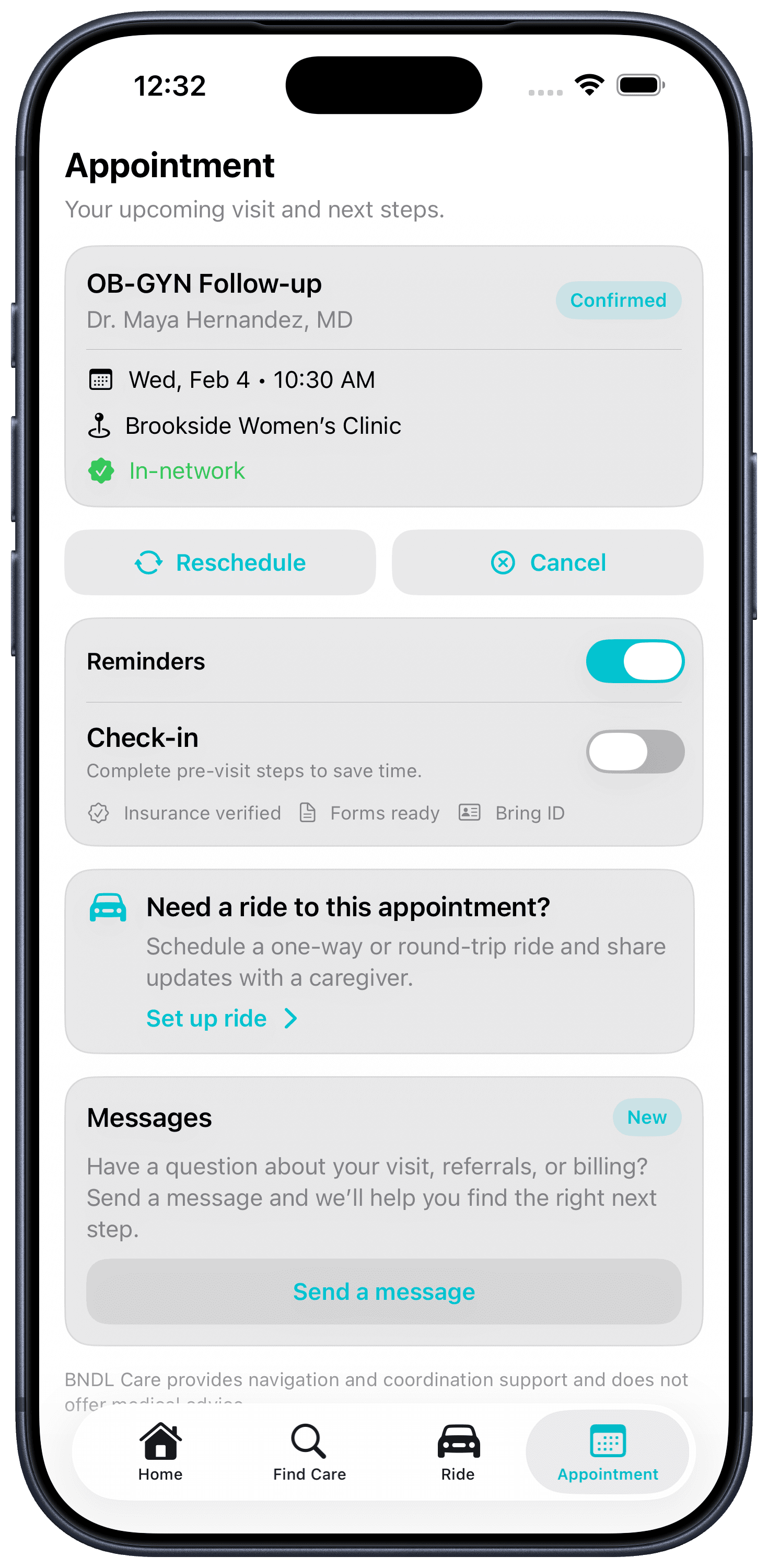
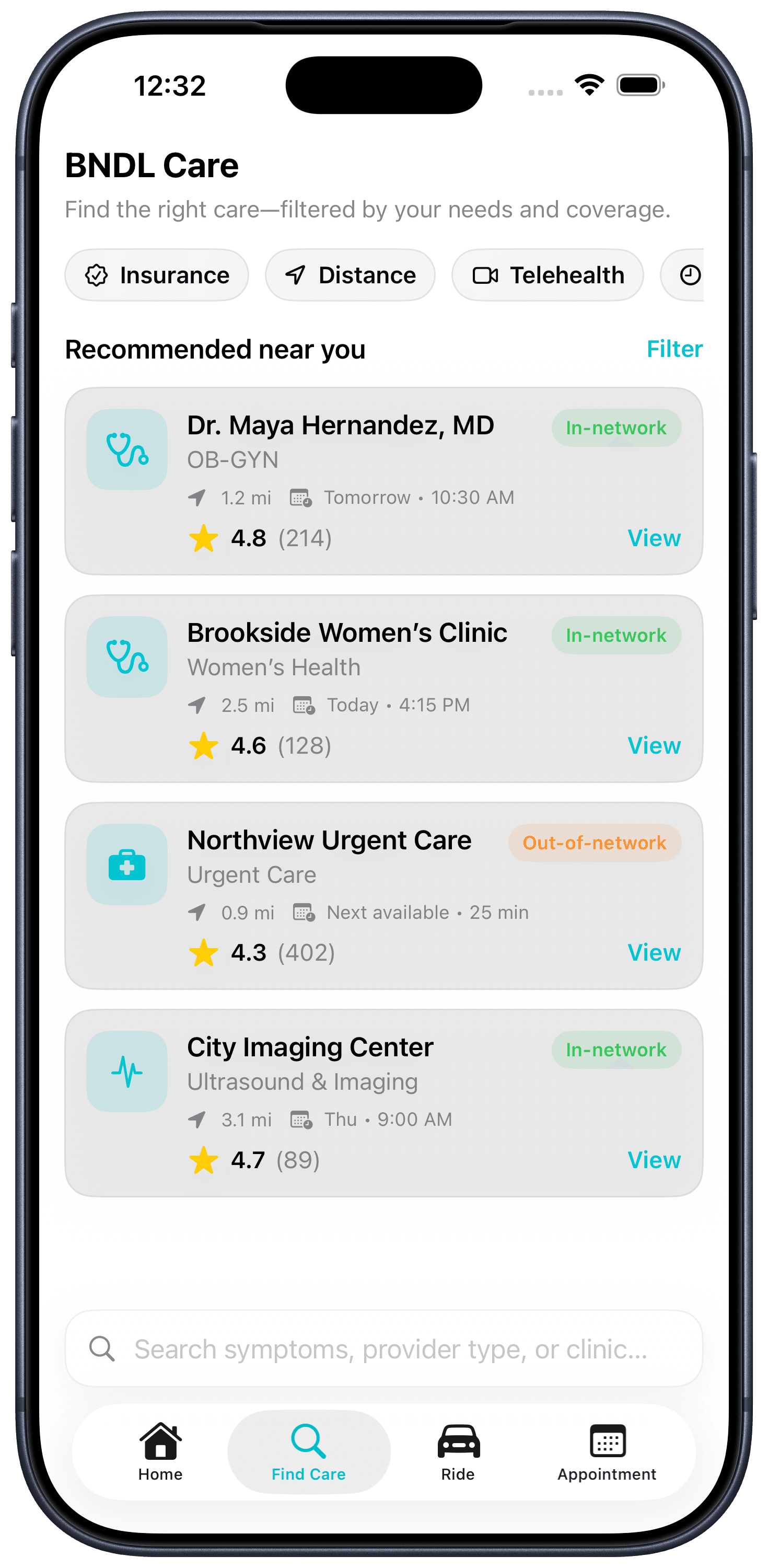
Bndl Care's platform brings together your care team, appointment scheduling, and benefit information in one place—so you spend less time navigating systems and more time focusing on health. Whether you're coordinating a specialist referral or arranging transportation to a follow-up visit, Bndl makes it simple.
Have questions about your specific coverage or care options? Reach out to your care coordinator or contact us at contact@bndlcare.com.