Access to healthcare does not begin at the clinic door.
For many patients, the first barrier is simply getting there. Transportation challenges are one of the most overlooked obstacles in healthcare — and one of the most actionable. Missed appointments, delayed follow-ups, and gaps in preventive care are often not caused by lack of intent, but by lack of access.
Transportation as a Healthcare Barrier
Patients face transportation challenges for a wide range of reasons:
- No personal vehicle or inability to drive
- Limited or unreliable public transportation
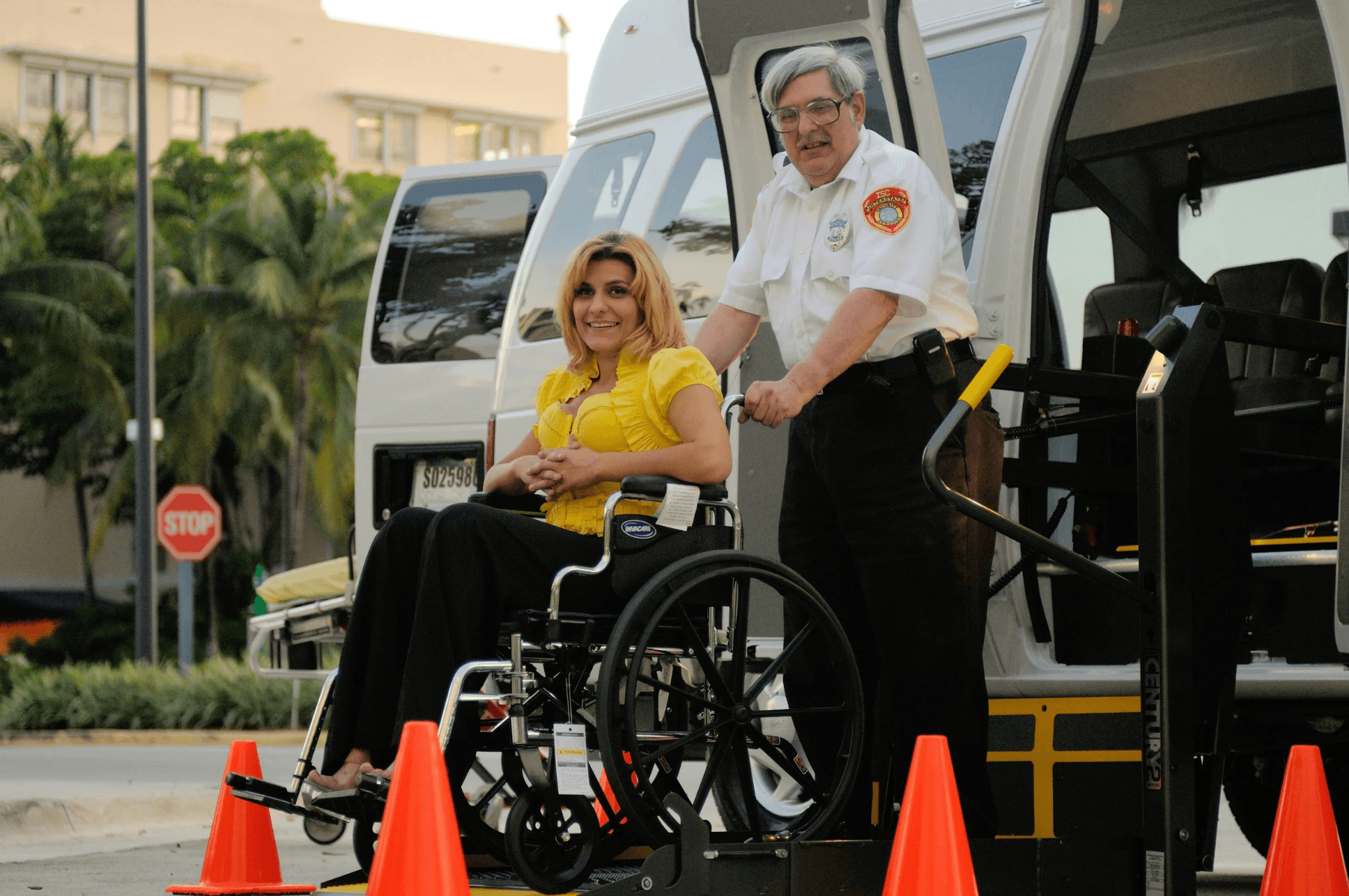
- Mobility limitations that require specialized vehicles
- Financial constraints that make rideshare unaffordable
- Long travel distances, especially in rural areas
For caregivers, coordinating transportation adds another layer of complexity to an already full plate. For providers, missed appointments disrupt clinic flow and create downstream scheduling problems.
An estimated 3.6 million Americans miss or delay medical care each year because of transportation barriers. This is not a niche problem — it is one of the most common reasons care plans break down.
Transportation is not just a logistical issue. It directly affects continuity of care.
The Impact on Clinics and Providers
When patients miss appointments due to transportation:
| Consequence | Who It Affects |
|---|---|
| No-shows and last-minute cancellations | Provider schedule and revenue |
| Unused time slots that can't be filled quickly | Clinic operational efficiency |
| Delayed follow-ups and care plan gaps | Patient health outcomes |
| Staff time spent on manual rescheduling | Administrative burden |
| Repeat emergency visits for preventable issues | Health system costs |
Transportation solutions must be embedded into the care experience — not treated as an afterthought or left to the patient to figure out after booking.
Integrated Ride-to-Care: A Smarter Approach
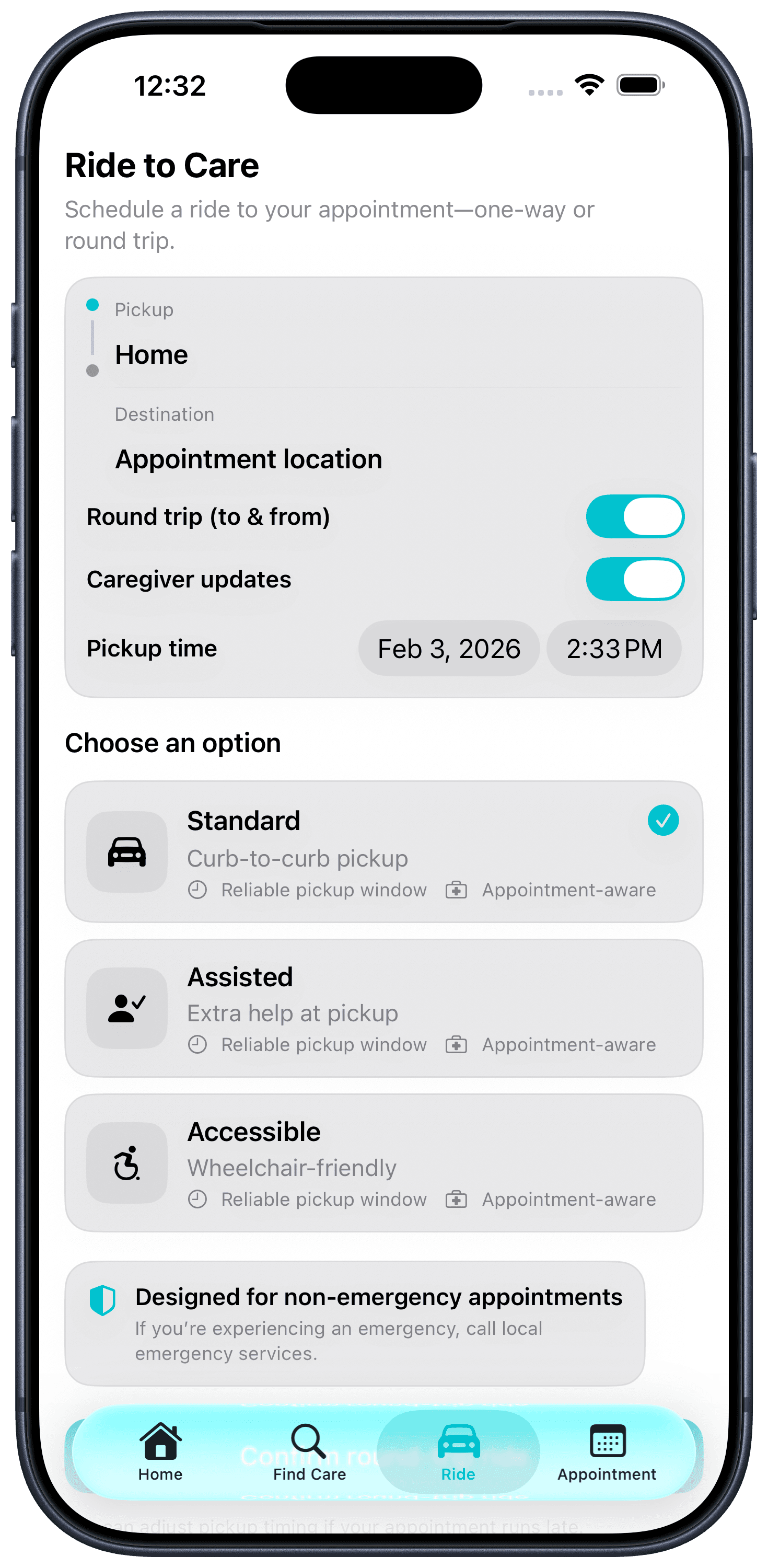
Rather than requiring patients to coordinate rides separately, transportation can be offered at the moment of appointment booking — before friction has a chance to build.
What an Integrated System Provides
An effective ride-to-care integration allows patients to:
- Schedule transportation at the time of booking — not as a separate step days later
- Choose ride types tailored to their needs — standard, accessible, or Medicaid-eligible transport
- Receive real-time ride tracking — so they know exactly when the driver will arrive
- Share ride status with caregivers — so a family member or coordinator can monitor the trip
- Get reminders — for both the appointment and the ride pickup time
Ride Options by Patient Need
| Patient Situation | Recommended Ride Type |
|---|---|
| Mobility limitations or wheelchair user | Wheelchair-accessible vehicle (WAV) |
| Medicaid beneficiary | Non-emergency medical transport (NEMT) |
| Elderly patient with caregiver at home | Monitored ride with caregiver alert |
| Standard outpatient visit | Rideshare integration (Lyft, Uber Health) |
| Rural patient with long travel distance | Scheduled van or medical transport |
By matching ride type to patient need, the system becomes inclusive rather than one-size-fits-all.
Booking a Ride: What to Expect
When transportation is integrated into your appointment booking, the process should take less than two minutes:
- Confirm your appointment date, time, and location
- Select whether you need transportation
- Choose a ride type based on your needs
- Enter your pickup address
- Confirm the booking — you'll receive a reminder before the day
On the day of your appointment, you'll receive a notification when your driver is on the way and can track their arrival in real time.
Closing the Loop for Providers
When transportation is integrated with scheduling, the benefits extend to the entire care team:
- Reduced no-show rates with predictable arrival times
- Better clinic flow when transportation is confirmed in advance
- Improved care continuity for patients with chronic conditions
- More equitable access for patients who would otherwise fall through the cracks
Addressing transportation is one of the most direct interventions for closing gaps in healthcare access — and it does not require changing anything clinical.
How Bndl Care Helps
Bndl Care integrates ride scheduling directly into the appointment booking flow. Patients can arrange transportation, select customized ride options, and track their ride in real time — all within the same platform. By connecting care coordination with ride-to-care services, Bndl Care helps remove one of the most common barriers to consistent, continuous care.
Need help arranging a ride to your next appointment? Talk to your Bndl Care coordinator or contact us at contact@bndlcare.com.